
Ricotta Filling for Lasagna (Creamy, Never Watery)
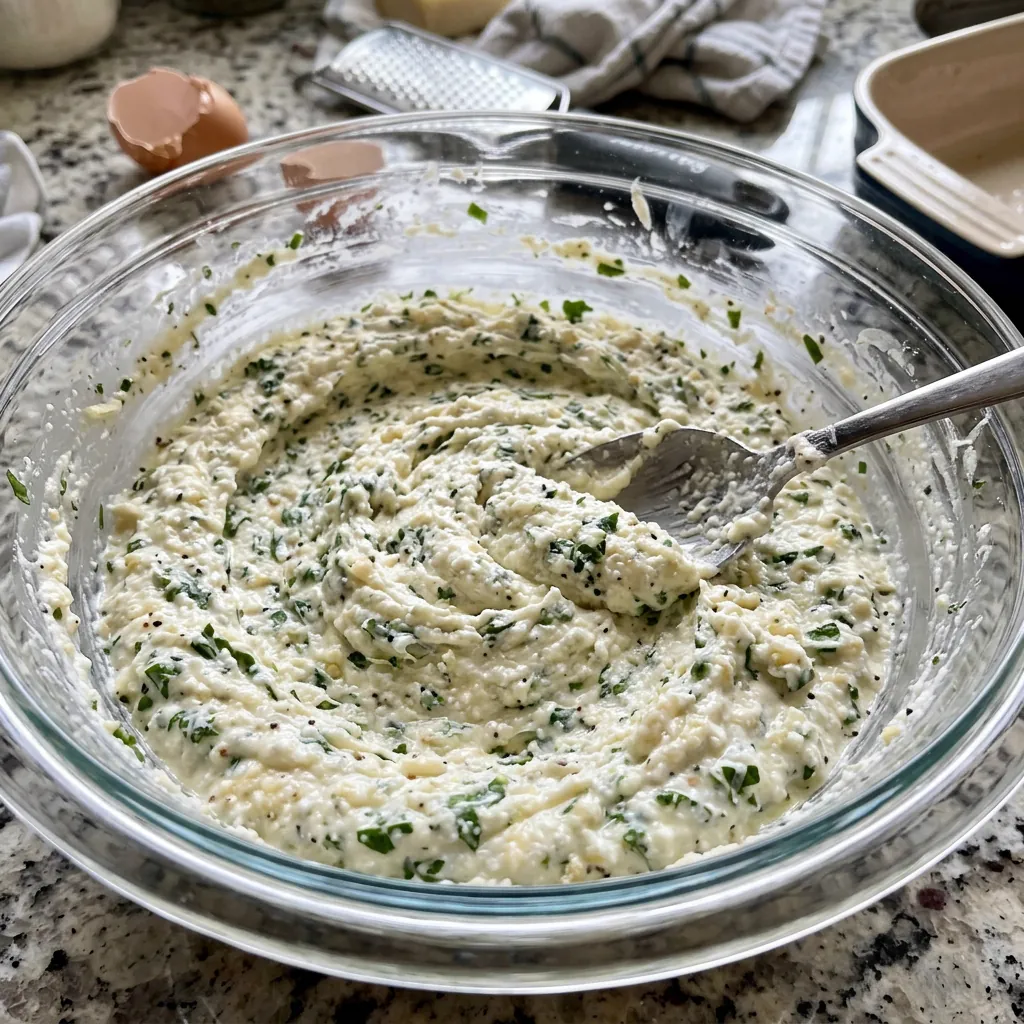
The best ricotta cheese recipe for lasagna is whole-milk ricotta beaten with egg, Parmesan, and herbs until smooth and scoopable. The egg sets the filling as the lasagna bakes, so the cheese layer stays creamy instead of weeping water into the pan.
What Makes This Recipe Work
Draining the ricotta first and binding it with egg and grated Parmesan is what keeps the filling thick and sliceable. A pinch of nutmeg and black pepper rounds out the mild cheese without overwhelming the other layers.
Ingredients for Ricotta Filling for Lasagna (Creamy, Never Watery)
- 2 cups (16 oz / 450 g) whole-milk ricotta, drained
- 1 large egg, lightly beaten
- 3/4 cup (75 g) grated Parmesan, divided
- 1 cup (100 g) shredded mozzarella
- 2 tbsp finely chopped fresh parsley
- 1/2 tsp garlic powder
- 3/4 tsp kosher salt
- 1/4 tsp black pepper
- Pinch of ground nutmeg
How to Make Ricotta Filling for Lasagna (Creamy, Never Watery)
- Set a fine-mesh strainer over a bowl, add the ricotta, and refrigerate for 15 to 20 minutes so excess whey drains off.
- Transfer the drained ricotta to a medium bowl and break it up with a fork until smooth with no large lumps.
- Stir in the egg, 1/2 cup of the Parmesan, the mozzarella, parsley, garlic powder, salt, pepper, and nutmeg until evenly combined.
- Let the filling sit for 10 minutes while you sauce the baking dish; it will firm up slightly and be easier to spread.
- Spoon about 1/3 cup of filling onto each cooked or no-boil lasagna noodle and spread it to within a half inch of the edges so it does not squeeze out when you layer.
- Layer the filled noodles with meat sauce or bolognese sauce and extra mozzarella in a 9x13 baking dish, then top with the remaining Parmesan.
- Bake the assembled lasagna at 375°F (190°C), covered for 25 minutes and uncovered for 25 minutes, until the top is golden and the sauce bubbles at the edges.
- Rest the lasagna for 15 minutes before cutting so the ricotta layer sets into clean slices.
Tips for the Best Ricotta Filling for Lasagna (Creamy, Never Watery)
- Use full-fat ricotta only. Part-skim ricotta releases more water and turns grainy during the long bake.
- If the filling still looks loose after draining, whisk in 1 tbsp of all-purpose flour to help it set.
- Mix the filling up to a day ahead and keep it covered in the fridge; stir once before using.
- Taste a small spoonful of the raw filling for salt before assembling, since the sauce will mellow the seasoning.
Variations and Substitutions
- Cottage cheese swap: substitute 2 cups of cottage cheese blended smooth for the ricotta, a common approach in a classic lasagna recipe made with cottage cheese.
- For a vegetable version, layer this filling into vegetable lasagna with drained spinach and sautéed mushrooms.
- Skip the ricotta entirely and use the silky sauce from lasagna with bechamel for a northern Italian style.
- The filling works in slow cooker lasagna exactly as it does in the oven version.
How to Store and Reheat
- Covered tightly, the filling keeps in the fridge for up to 2 days; stir it once before using since it may separate slightly.
- Freeze the assembled, unbaked lasagna rather than the loose filling; wrap the dish tightly and bake from frozen, adding 20 to 25 minutes to the covered bake time.
Keep Exploring Comfort Dinners Recipes
Try a variation
You might also like
Explore another collection
Ricotta Filling for Lasagna (Creamy, Never Watery) FAQ
Can I make ricotta filling ahead of lasagna?
Yes, mix it up to 2 days in advance and store it covered in the fridge. Stir it well before spreading, and add the egg just before assembling if you mixed it more than a day ahead.
Why is my lasagna filling watery?
Watery filling almost always means undrained ricotta. Drain it for at least 15 minutes, and if it is still loose, whisk in 1 tbsp flour. Avoiding no-boil noodles with extra-wet sauce also helps the layers set.
Ricotta or cottage cheese for lasagna?
Ricotta gives a smoother, richer layer, while cottage cheese, blended smooth first, gives a lighter texture and is common in many home-style lasagna recipes with cottage cheese. Either works with the egg-and-Parmesan binding method here.
Do you need egg in a ricotta lasagna filling?
The egg is what sets the cheese so slices hold together. Without it, the ricotta softens into the sauce and the layers slide apart when you cut the lasagna.
Recipe Quick Facts
Rate This Recipe
Tried it? Leave a rating and a short note to help other home cooks.
Leave a Review
Share your rating, feedback, or any helpful ingredient tweaks with our cooking community!