
Salsa Verde (Roasted Tomatillo, Blender Recipe)
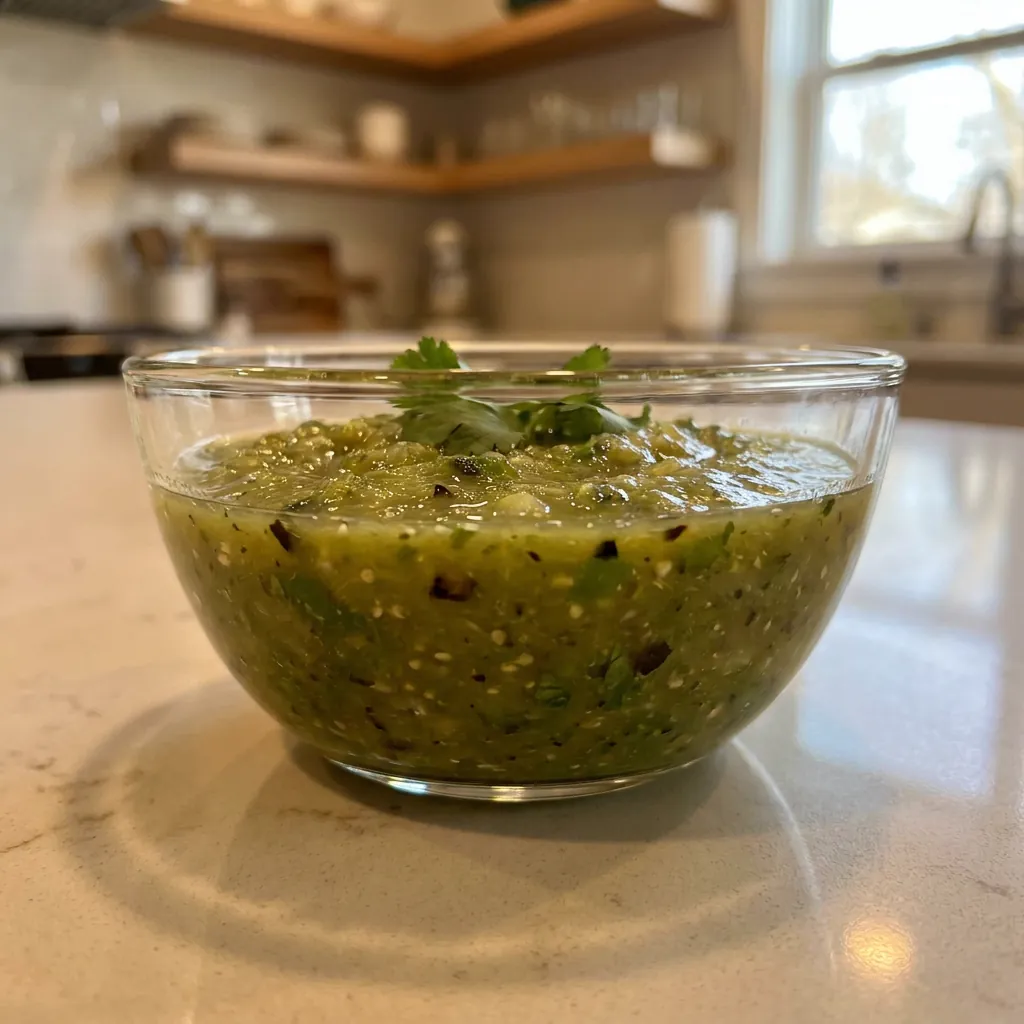
This salsa verde recipe broils tomatillos, chiles, and garlic until blistered, then blends them into a bright, tangy green salsa. Roasting deepens the flavor and tames the raw edge of the tomatillos, and you control the heat by how many chile seeds you keep.
What Makes This Recipe Work
Charring the tomatillos and chiles under high heat mellows their sharpness and adds a smoky note, while blending in a little of the sweet roasted onion balances the tart fruit.
Ingredients for Salsa Verde (Roasted Tomatillo, Blender Recipe)
- 1 1/2 lb (680 g) tomatillos, husked, rinsed, and halved (about 12 medium)
- 2 to 4 serrano or jalapeno chiles, stemmed (seeds kept for heat)
- 1/2 white onion, cut into thick slices
- 3 garlic cloves, unpeeled
- 1/2 cup packed fresh cilantro leaves and tender stems
- Juice of 1 lime, about 2 tbsp
- 1 tsp salt, plus more to taste
- 1/2 tsp granulated sugar
- 1 tbsp olive oil
- 1 avocado, optional, for a creamy variation
How to Make Salsa Verde (Roasted Tomatillo, Blender Recipe)
- Set an oven rack about 6 inches below the broiler and heat the broiler to high; line a rimmed baking sheet with foil.
- Toss the tomatillos, chiles, onion slices, and unpeeled garlic with the olive oil and spread them cut side up on the baking sheet.
- Broil 8 to 12 minutes, turning once, until the tomatillos and chiles are blistered and softened in spots, and the onion and garlic are charred at the edges; watch closely so they do not burn.
- Slip the skins off the garlic, then transfer the roasted vegetables and any juices to a blender along with the cilantro, lime juice, salt, and sugar.
- Pulse 5 to 8 times to a coarse, spoonable salsa, leaving some texture rather than pureeing it smooth; add 1 to 2 tbsp water if it is too thick.
- Taste and adjust the salt, lime, and heat, adding more chile or some chile seeds if you want it spicier.
- Cool to room temperature before serving, or chill if you prefer it cold.
Tips for the Best Salsa Verde (Roasted Tomatillo, Blender Recipe)
- Keep the chiles whole while roasting and remove seeds after, so you can dial the heat up or down at the blender.
- Do not over-blend, or the salsa turns into a thin puree; short pulses keep the body.
- Roasted tomatillos are tarter and sweeter than raw ones, so taste for salt and sugar at the end.
- Blend in half an avocado for a richer, creamier salsa that coats a spoon.
Variations and Substitutions
- Raw salsa verde: skip the broiler and blend the ingredients fresh for a sharper, more tart version.
- Avocado salsa verde: blend in 1 ripe avocado for a creamy green salsa that is best the day it is made.
- To make it shelf stable, follow a tested tomatillo canning recipe rather than jarring this fresh batch.
- Add 2 plum tomatoes to the broiler pan for a red-green hybrid closer to a homemade salsa.
How to Store and Reheat
- Refrigerate salsa verde in a sealed container for up to 5 days, and press plastic wrap onto the surface to slow browning.
- The avocado variation should be eaten within 1 to 2 days, since it discolors quickly.
Keep Exploring Preserving Recipes
You might also like
Explore another collection
Salsa Verde (Roasted Tomatillo, Blender Recipe) FAQ
Is salsa verde spicy?
Salsa verde is usually mild to medium, depending on the chiles. Serrano peppers are hotter than jalapenos, so use fewer and remove the seeds and ribs for a mild salsa, or keep them for more heat.
What is the difference between tomatillos and green tomatoes?
Tomatillos are a small, tart fruit in a papery husk and are the traditional base for salsa verde. Green tomatoes are unripe tomatoes with a firmer, more bitter bite and are better for pickling or frying.
How long does salsa verde last?
Homemade salsa verde keeps about 5 days in the refrigerator in a sealed container. The avocado version is best within 1 to 2 days because it browns and thins.
Can you can salsa verde?
Tomatillos are acidic enough to water-bath can, but only in a tested recipe with measured acid and approved processing times. Follow a tested tomatillo salsa formula rather than canning this fresh recipe as written.
Recipe Quick Facts
Rate This Recipe
Tried it? Leave a rating and a short note to help other home cooks.
Leave a Review
Share your rating, feedback, or any helpful ingredient tweaks with our cooking community!