
Homemade Sauerkraut (Simple Crock or Jar Ferment)
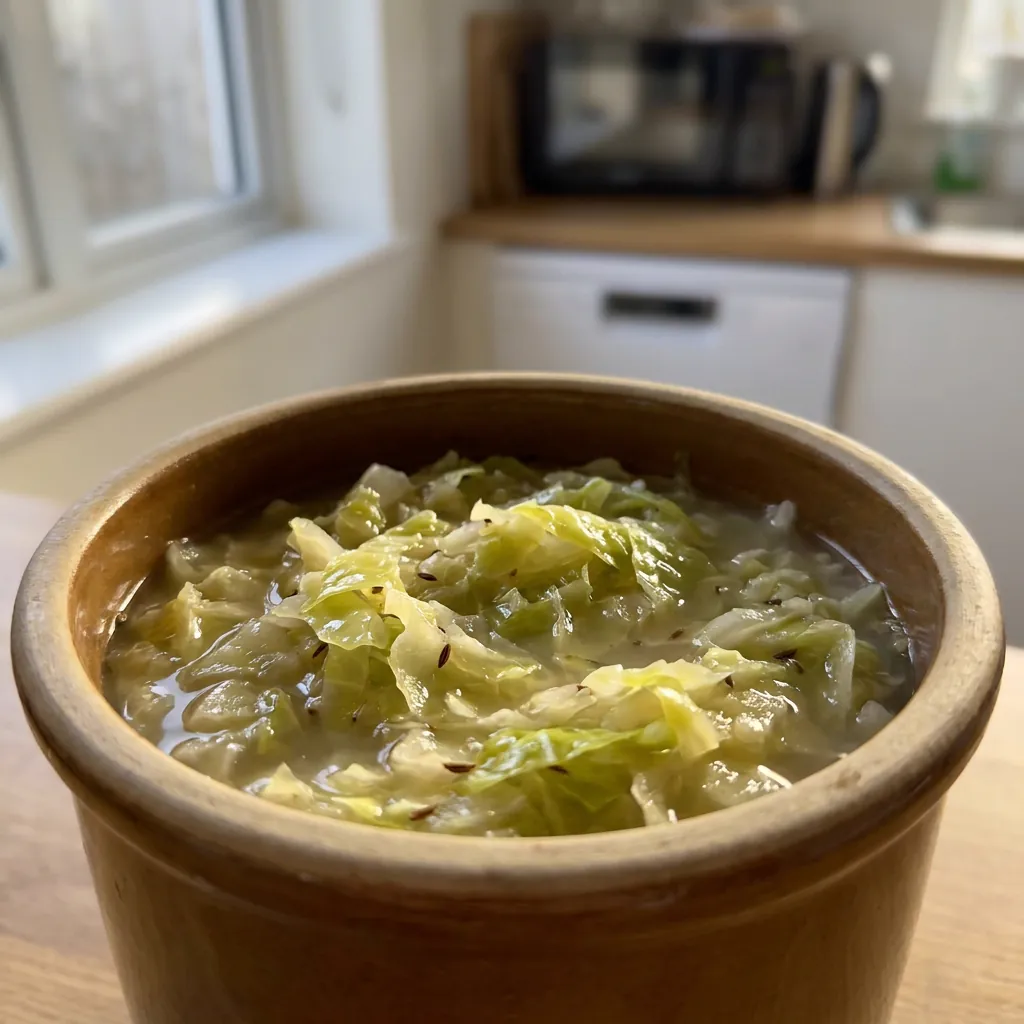
This sauerkraut recipe turns a head of cabbage and salt into tangy, crunchy fermented kraut using nothing more than a clean jar and time. The method rests on two things that keep a home ferment safe: the right salt ratio and keeping the cabbage submerged under its own brine.
What Makes This Recipe Work
Salt pulls water from the shredded cabbage to create a brine that lactic-acid bacteria thrive in while spoilage organisms cannot, and a weight that holds the cabbage below the surface keeps oxygen out so the ferment stays clean.
Ingredients for Homemade Sauerkraut (Simple Crock or Jar Ferment)
- 5 lb (2.3 kg) firm green cabbage, about 2 medium heads
- 3 tbsp (45 g) non-iodized pickling or canning salt (about 2% of the cabbage weight)
- 1 tbsp caraway seeds (optional)
- 1 tsp juniper berries, lightly crushed (optional)
- 2 dried bay leaves (optional)
- 1 tbsp black peppercorns (optional)
- 1 small tart apple, peeled and grated (optional, adds a little sweetness)
- 1 large carrot, grated (optional, adds color)
- 3 sprigs fresh dill or 2 tsp dill seed (optional)
How to Make Homemade Sauerkraut (Simple Crock or Jar Ferment)
- Wash a 1-gallon crock or fermenting jar, a plate or weight that fits inside it, a large bowl, and your knife and board with hot soapy water and rinse well; clean equipment matters more than sterile equipment for a ferment.
- Remove the outer leaves, quarter the cabbage, cut out the core, and shred the cabbage about 1/8 inch thick with a knife or mandoline.
- In a large bowl, toss the shredded cabbage with the salt and massage it firmly with clean hands for 5 to 10 minutes, until the cabbage wilts and releases enough brine that a squeezed handful drips liquid.
- Pack the cabbage into the jar a handful at a time, pressing down hard with your fist or a tamper after each addition to force out air pockets; tuck the caraway, peppercorns, apple, carrot, and dill between layers if using.
- Place the weight or a clean plate on top so the cabbage stays at least 1 inch below the surface of the brine; if the brine does not cover the cabbage after 24 hours, top it up with 1 tsp salt dissolved in 1 cup water.
- Cover the jar loosely with a lid set on top, an airlock, or a clean cloth secured with a band, and keep it out of direct sunlight at 65 to 72 F.
- Ferment 1 to 4 weeks, pressing the cabbage back under the brine every day for the first week and every few days after; it is ready when the bubbling slows and it tastes tangy and pleasantly sour to your liking.
- Remove the weight, pack the kraut and brine into clean jars, label with the date, and refrigerate; a thin white film on top is harmless kahm yeast to skim, but fuzzy mold, pink or black spots, slime, or a rotten smell means discard the batch.
Tips for the Best Homemade Sauerkraut (Simple Crock or Jar Ferment)
- Use non-iodized pickling salt, because iodized table salt and anti-caking agents can darken the kraut and slow fermentation.
- Keep the cabbage fully submerged at every check; exposure to air is the most common cause of spoilage.
- Fermenting between 65 and 72 F gives the best flavor, while warmer temperatures speed it up and can soften the texture.
- For a sweeter, less sour kraut, taste at 1 to 2 weeks and move it to the fridge to slow the ferment down.
Variations and Substitutions
- Grated apple and carrot stirred in before packing make a slightly sweet kraut that pairs well with pork.
- Add sliced jalapeno or crushed red pepper for a spicy batch, keeping the cabbage-to-salt ratio unchanged.
- For a quick, crunchy vegetable in the same spirit with no fermentation time, make refrigerator pickles with cucumbers.
- Serve the finished kraut alongside pickled red onions on sandwiches and burgers for a bright, acidic topping.
How to Store and Reheat
- Keep fermented sauerkraut in sealed jars in the refrigerator, where it lasts up to 6 months and continues to deepen in flavor.
- Store in glass or food-grade plastic rather than bare metal, since the acid can react with metal containers.
Keep Exploring Preserving Recipes
You might also like
Explore another collection
Homemade Sauerkraut (Simple Crock or Jar Ferment) FAQ
How much salt do I use for homemade sauerkraut?
Use about 3 tablespoons of non-iodized pickling salt per 5 lb of shredded cabbage, which is roughly 2% salt by weight. Weighing the cabbage and calculating 2% of its weight in salt is the most accurate way to keep the ferment safe and consistent.
How long does sauerkraut need to ferment?
Most batches are ready in 1 to 4 weeks at 65 to 72 F, with 3 to 4 weeks giving a fully sour kraut. Start tasting at about 1 week and move the jar to the refrigerator when it reaches the flavor you like.
Is it safe to eat sauerkraut with white film or mold on top?
A thin white film or foam is harmless kahm yeast and can simply be skimmed off. Discard the batch if you see fuzzy mold, pink, black, or blue spots, or if the kraut smells rotten or feels slimy, since those are signs of spoilage.
What salt is best for fermenting sauerkraut?
Use non-iodized pickling or canning salt. It is pure salt with no iodine or anti-caking additives, which can slow fermentation and make the cabbage brown or soft.
Recipe Quick Facts
Rate This Recipe
Tried it? Leave a rating and a short note to help other home cooks.
Leave a Review
Share your rating, feedback, or any helpful ingredient tweaks with our cooking community!