
Sourdough Pizza Dough (Chewy Crust, Same-Day or Overnight)
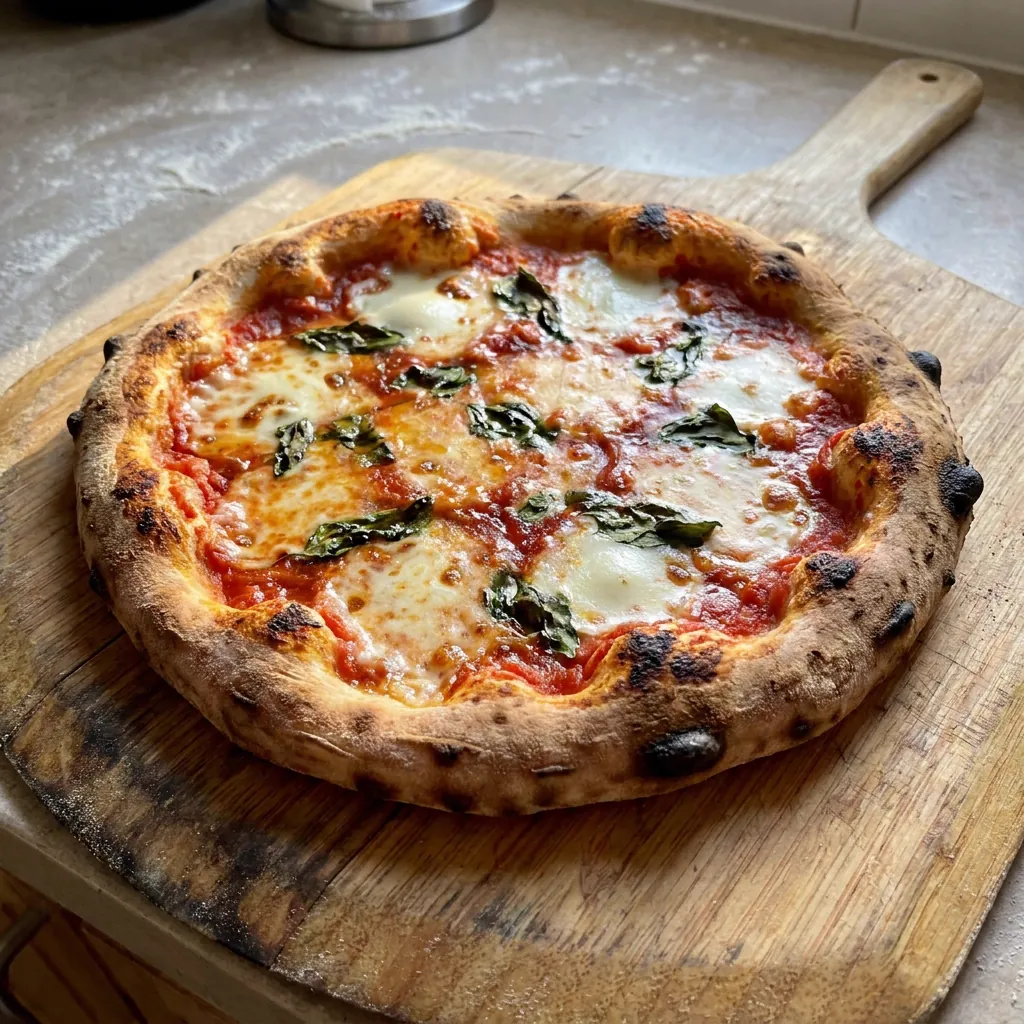
Sourdough pizza dough makes a chewy, blistered crust with a tang that commercial yeast cannot match. This sourdough pizza dough recipe gives you a same-day option in about 8 hours and an overnight cold-ferment option with even better flavor and structure.
What Makes This Recipe Work
A moderate 65 percent hydration keeps the dough easy to stretch by hand while still opening into a light crust. The long ferment develops gluten strength and flavor, so the dough resists tearing when you shape it.
Ingredients for Sourdough Pizza Dough (Chewy Crust, Same
- 500 g (about 4 cups) bread flour (100 percent)
- 325 g (1 1/3 cups) water, lukewarm (65 percent hydration)
- 100 g (1/2 cup) active sourdough starter, 100 percent hydration, at its peak (20 percent)
- 10 g (1 3/4 tsp) fine sea salt (2 percent)
- 15 g (1 tbsp) olive oil (3 percent)
How to Make Sourdough Pizza Dough (Chewy Crust, Same
- Mix the flour and water and rest 30 minutes, then add the starter, salt, and olive oil and mix until uniform. The dough will be soft and slightly sticky.
- Knead in a stand mixer 8 minutes or by hand 10 minutes, until the dough is smooth and passes the windowpane test. Cover and rest 30 minutes.
- Bulk ferment at room temperature 4 to 6 hours, folding the dough every 45 minutes for the first three hours, until it is puffy and nearly doubled.
- Divide the dough into 4 equal balls, about 230 g each, and shape each into a tight round. Place in lightly oiled containers.
- For same-day pizza, proof the balls at room temperature 1 to 2 hours, until relaxed; for more flavor, refrigerate 24 to 72 hours and let them warm at room temperature 1 to 2 hours before baking.
- Heat the oven to 500 to 550 degrees Fahrenheit with a baking steel or stone on the upper rack for at least 45 minutes, or as hot as your oven allows.
- On a floured peel, stretch or press one ball into a 10 to 12 inch round, leaving a puffy rim and keeping the center thin. Work quickly so the dough does not stick.
- Top with a thin layer of sauce and toppings, then slide onto the hot steel and bake 7 to 10 minutes, until the crust is blistered and the cheese bubbles. Repeat with the remaining dough.
Tips for the Best Sourdough Pizza Dough (Chewy Crust, Same
- Preheat the steel or stone at least 45 minutes for a crisp, blistered base.
- Keep toppings light so the crust bakes through before the top turns dry.
- Let cold dough warm up before stretching so it springs back less.
Variations and Substitutions
- Brush the rim with olive oil and finish with flaky salt for a bakery-style crust.
- Top with pesto, roasted vegetables, or a white ricotta base instead of tomato sauce.
- The same starter and shaping skills work for sourdough bagels and sourdough english muffins.
- Bake the dough as a quick flatbread in a cast-iron pan or Dutch oven if you lack a stone.
How to Store and Reheat
- Raw dough balls keep in the fridge up to 5 days, improving in flavor; let them warm before shaping.
- Baked crusts freeze up to 2 months and reheat at 400 degrees Fahrenheit until crisp.
Keep Exploring Sourdough Recipes
You might also like
Explore another collection
Sourdough Pizza Dough (Chewy Crust, Same FAQ
How long does sourdough pizza dough need to rest?
Allow 4 to 6 hours of room-temperature bulk fermentation, then 1 to 2 hours for the shaped balls to relax, or up to 72 hours in the fridge for deeper flavor. Resting lets the gluten relax so the dough stretches without tearing.
Can you make sourdough pizza dough in one day?
Yes. With an active starter and a warm kitchen, the dough is ready in about 8 hours from mixing to baking. Use the same-day proofing step and shape the dough while it is relaxed.
What temperature should you bake sourdough pizza?
Bake as hot as your oven allows, ideally 500 to 550 degrees Fahrenheit on a preheated steel or stone. High heat gives fast oven spring and a blistered, crisp base.
Why is my sourdough pizza dough tough?
Tough dough usually comes from too little water, under-fermentation, or overworking the dough while shaping. Keep hydration near 65 percent, ferment until puffy, and press gently rather than kneading the shaped round.
Recipe Quick Facts
Rate This Recipe
Tried it? Leave a rating and a short note to help other home cooks.
Leave a Review
Share your rating, feedback, or any helpful ingredient tweaks with our cooking community!