
How to Feed a Sourdough Starter (Schedule, Ratios & Fixes)
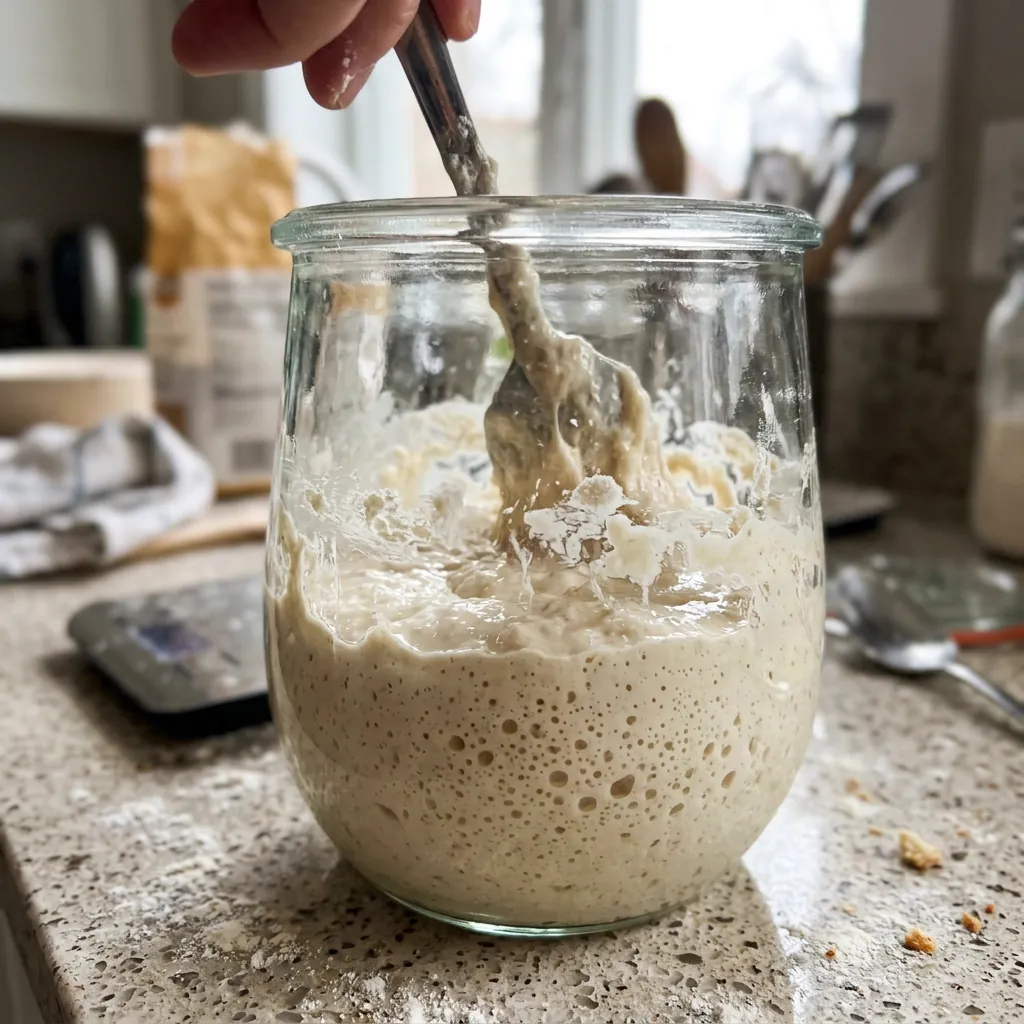
Feeding a sourdough starter means giving it fresh flour and water so the yeast and bacteria inside stay active and predictable. The right ratio and schedule depend on whether the starter lives on the counter or in the fridge, and this guide covers how to feed sourdough starter with 1:1:1 and 1:2:2 ratios, plus fixes for common problems.
What feeding a starter actually does
Every feeding dilutes the acids and alcohol that build up as the starter ferments and supplies fresh sugars for the next rise. A well-fed starter rises predictably, smells pleasantly tangy, and doubles within a few hours.
Underfeeding lets acid accumulate until the culture turns sharply sour and sluggish, while feeding tiny amounts of flour can starve it. Matching the flour you add to the amount already in the jar is what keeps the biology balanced.
How to feed sourdough starter step by step
Discard all but a small amount of the starter, then add flour and water in a set ratio by weight. A 1:1:1 feeding uses equal parts starter, flour, and water, while a 1:2:2 feeding uses one part starter to two parts each of flour and water and stretches the time between feedings.
For a 1:1:1 feed, discard down to 50 grams of starter, then stir in 50 grams flour and 50 grams water. Mix until no dry flour remains, scrape down the sides of the jar, cover loosely, and leave at room temperature until the starter peaks and just begins to fall.
Counter vs fridge feeding schedules
A starter kept on the counter for daily baking usually needs a 1:1:1 or 1:2:2 feed once every 8 to 12 hours. Warmer kitchens eat through the flour faster and pull the schedule tighter, so judge by how the starter looks rather than by a fixed time alone.
A starter stored in the fridge for occasional baking can be fed as little as once a week. Cold slows fermentation, so a fridge starter needs a refresh and one or two warm-up feeds at room temperature before you bake with it.
How to tell an active sourdough starter from a sluggish one
An active sourdough starter domes, roughly doubles in 4 to 8 hours at room temperature, and shows a lacy web of bubbles when you pull back the surface. It smells like yogurt or fruit with a clean tang rather than nail polish or straight vinegar.
A sluggish starter rises little, smells strongly of acetone, or develops a dark liquid layer called hooch. Feed it a 1:2:2 ratio, keep it warmer, and repeat daily until it consistently peaks before you rely on it for bread.
Troubleshooting hooch, false rises, and slow starters
A thin, watery layer of hooch on top is a sign of hunger, not spoilage; pour it off or stir it in and feed more often or at a larger ratio. A starter that bubbles fiercely but never grows may be showing a bacterial false rise in its first days, which settles as the culture matures.
If your flour has little whole grain, a starter can be slow, so replacing part of the bread flour with whole wheat or rye gives the microbes more nutrients. A consistent temperature of 70 to 78 degrees Fahrenheit matters more than any single trick.
Flour and water for feeding
Unbleached all-purpose flour works for a general starter, while whole wheat, rye, or bread flour add minerals and ferment a touch faster. Use chlorine-free water, and if your tap water tastes strongly of chlorine, let it stand or use filtered water.
Keep the ratio by weight, not volume, since a cup of flour and a cup of water weigh very differently. A digital scale removes the guesswork and makes feedings repeatable week after week.
Handy Tips
- Feed by weight on a scale, because equal volumes of flour and water are not equal weights.
- Discard before feeding so the ratio stays accurate and the jar does not overflow.
- Bring a fridge starter to room temperature and give it one or two warm feeds before baking.
Keep Exploring Sourdough Recipes
Try a variation
You might also like
Explore another collection
Frequently Asked Questions
How do you feed sourdough bread starter?
Discard all but about 50 grams of starter, then add equal weights of flour and water for a 1:1:1 feed, or twice as much of each for 1:2:2. Stir, cover loosely, and let it sit at room temperature until it doubles and domes.
What is the best feeding ratio for sourdough starter?
A 1:1:1 ratio keeps a counter starter on a daily rhythm, while 1:2:2 gives it more food and more time between feedings for a fridge starter or a slow kitchen. Use the ratio that matches how often you plan to bake.
How often should you feed a sourdough starter?
A counter starter typically needs feeding every 8 to 12 hours, while a fridge starter can go a week between feedings. Feed more often in warm weather and when you bake regularly.
Can you feed a sourdough starter without discarding?
You can, but the jar grows quickly and the ratios drift, so the starter becomes hard to manage and slow to peak. Discarding a portion keeps the feed accurate and prevents waste from building up.
Why is my sourdough starter not rising after feeding?
The most common causes are cool room temperature, overfeeding with too little starter, or chlorine in the water. Move it somewhere warmer, feed a 1:1:1 ratio by weight, and use filtered water, then watch for steady improvement over several days.