
How to Make a Sourdough Starter From Scratch (7-Day Guide)
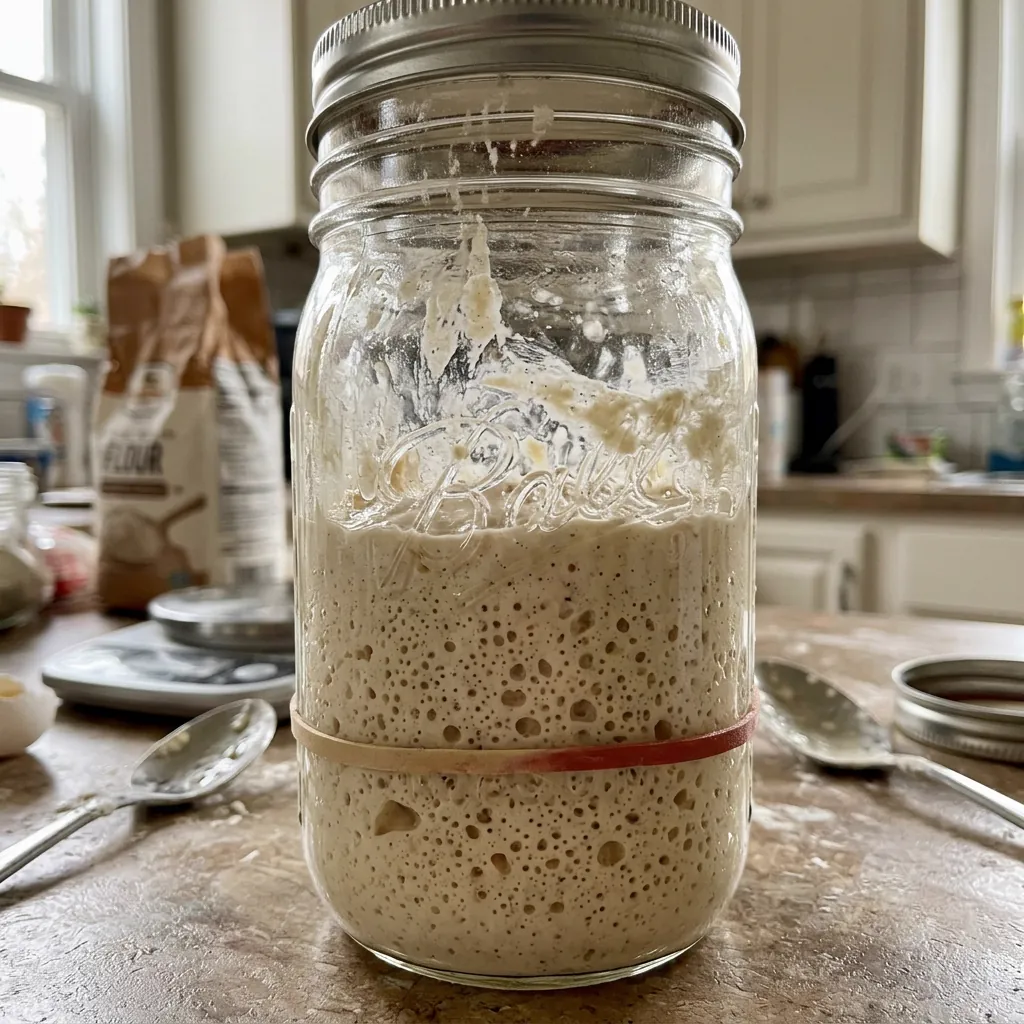
A sourdough starter is a live culture of flour and water that captures wild yeast and bacteria to leaven bread. You can build a sourdough starter from scratch in about seven days with just flour, water, and a daily feeding routine, no commercial yeast required.
What a sourdough starter actually is
A starter is a simple mixture of flour and water that becomes home to wild yeasts and lactic acid bacteria. The yeasts produce the gas that raises bread, and the bacteria create the tangy flavor and acidity.
Once it is active and bubbly, you keep it alive by feeding it fresh flour and water. That maintenance schedule deserves its own attention, which is why daily feeding has a separate guide.
What you need to make a starter
You need an unbleached all purpose flour or whole grain flour, water free of chlorine, a clean jar, and a scale for accuracy. Whole grain or rye flour ferments faster because it carries more nutrients.
Avoid bleached flour if you can, since the bleaching process reduces the wild yeast population. Filtered or bottled water is best if your tap water is heavily chlorinated.
Day by day: the first seven days
Day 1: mix 1/4 cup (30 g) flour with 1/4 cup (30 g) water in a jar, stir well, cover loosely, and leave at room temperature. Days 2 and 3: add the same amounts each day and stir.
Days 4 to 7: begin discarding half the jar and feeding 1/4 cup (30 g) flour with 1/4 cup (30 g) water, once daily. By day 5 to 7 you should see bubbles, a rise, and a tangy smell within a few hours of feeding.
Choosing your flour
Whole wheat, rye, or a blend of all purpose and whole grain flour gives the fastest, most vigorous start because of the extra nutrients in the bran. Unbleached all purpose flour works too and gives a milder flavor.
You can switch flours once the starter is established. Many bakers keep a white starter for everyday bread and feed it whole grain now and then to keep the microbes active.
Troubleshooting a new starter
A dark layer of liquid on top is called hooch and simply means the starter is hungry; pour it off or stir it in and feed more often. A starter that smells like acetone is also just hungry.
If nothing happens by day 4 or 5, move it somewhere warmer, around 75F to 80F. If you see pink, orange, or fuzzy growth, throw the starter out and start over, because those are molds or harmful bacteria.
The float test and why it can mislead
The float test drops a spoonful of starter into water and sees if it floats, which suggests enough trapped gas to levitate the dough. It can be a helpful quick check but it is not definitive.
A starter can float while still weak or sink while perfectly ready, depending on hydration and how recently it was stirred. Judge readiness mainly by a consistent doubling within 4 to 8 hours of feeding and a domed, bubbly surface.
Handy Tips
- Use a clear jar and mark the starting level with a rubber band so you can see exactly how much the starter rises.
- Keep the starter warm, around 75F, for the first week; a cold kitchen is the most common reason a new starter stalls.
- Be patient. A starter that looks quiet on day 3 often surges on day 5, so resist the urge to start over too soon.
Keep Exploring Sourdough Recipes
Try a variation
You might also like
Explore another collection
Frequently Asked Questions
How do you create a sourdough starter?
Mix equal weights of flour and water, leave the jar loosely covered at room temperature, and feed and discard daily for about seven days. Once the starter doubles reliably within a few hours of feeding, it is ready to bake with.
How do I know my sourdough starter is ready to use?
It should rise to about double its volume within 4 to 8 hours of feeding, look domed and full of bubbles, and smell pleasantly tangy rather than sharply sour. A float test can help, but the rise and smell are more reliable.
Why is my sourdough starter not rising?
The most common causes are a cool room, a young culture, or feeding too infrequently. Move it somewhere warmer near 75F, keep to a daily feeding schedule, and give it more time before changing anything else.
What is the liquid on top of my starter?
That liquid is called hooch, and it means the starter has run out of food and needs feeding. Stir it in or pour it off, then feed the starter and keep it on a more regular schedule.